
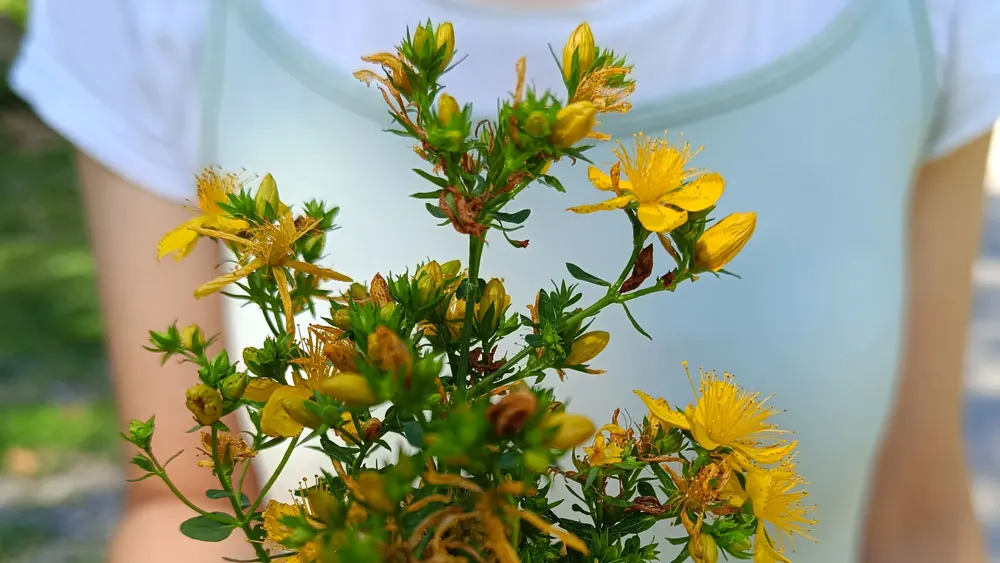
Summer is the season of flowering and the first fruits ripening under the warm sun. While we tend to our orchards and gardens, many plants in nature grow by themselves. Among the trees, grasses and weeds, there are valuable medicinal herbs, perfect for making teas, tinctures, syrups and jams.
Whether we head off into the woods, wander through meadows and clearings, or simply relax in our own garden or backyard, plants are all around us. If we take a closer look, we’ll discover many edible and medicinal species that often look like ordinary weeds. While gardens are flourishing, experienced foragers do not overlook the value of wild plants, which at this time of year offer their finest flowers and an abundance of forest fruits.
Among the wide variety of plants, there are also some poisonous species, so careful identification is essential. Fortunately, summer brings many edible plants that are easy to spot and recognise. With a little care and curiosity, anyone can become a forager of edible and medicinal wild plants. Before heading out into nature, it is helpful to know how to forage wild plants properly during the summer:
- Summer is the season of flowers and ripe fruits. Flowers should be picked in full bloom, when they are richest in aroma and active compounds. After flowering, some plants produce fruits that should be harvested when fully ripe.
- Towards the end of the growing season, it is time to collect seeds, which can be stored for teas, spices, or planting.
- The perfect time for foraging is on a dry, sunny morning, after the dew has dried and before the sun becomes too strong. This is when plants are richest in beneficial compounds.
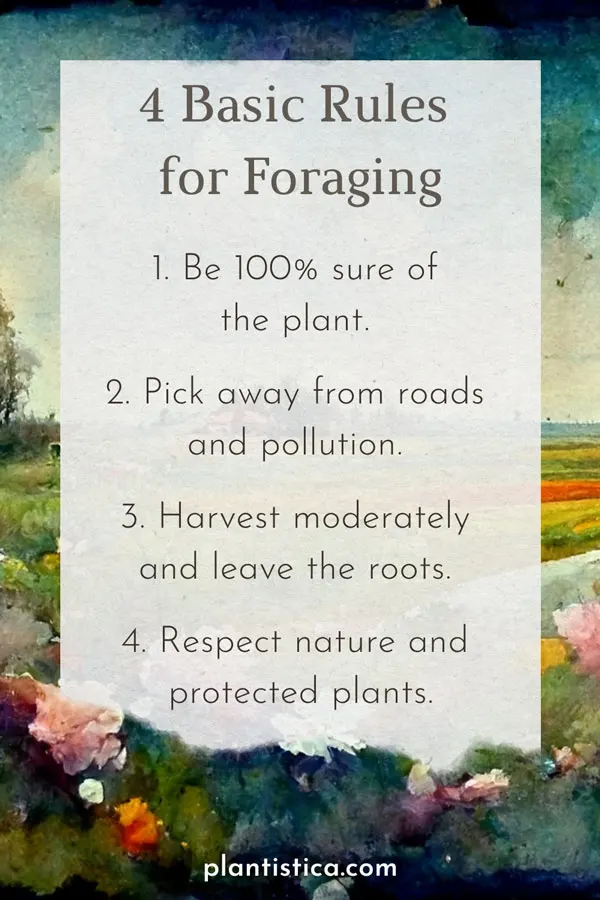
Following the basic rules of foraging, we can head out into nature and discover what to forage in summer.
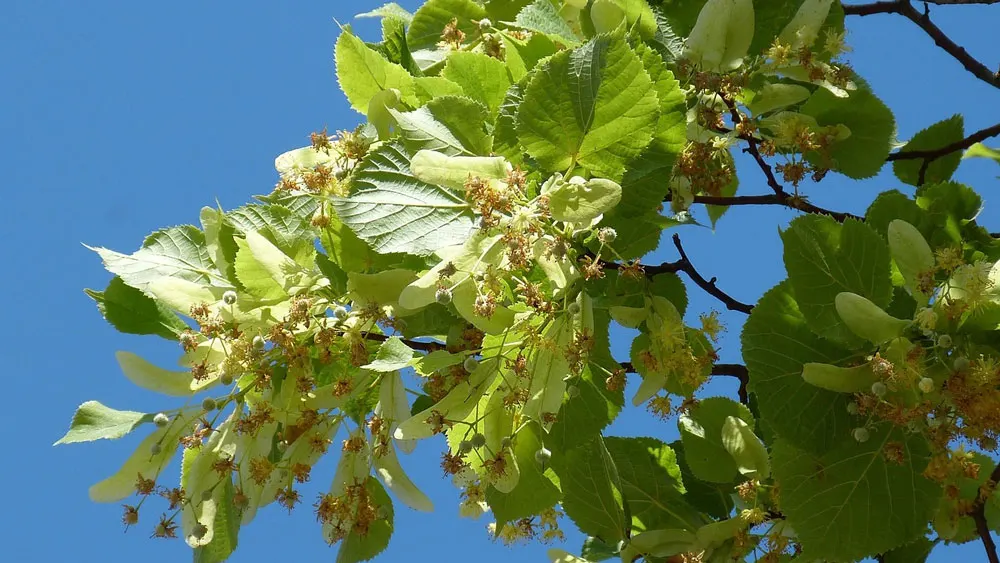
Linden
lat. Tilia platyphyllos
At the beginning of summer, the scent of linden draws us into parks, rural gardens, and deciduous and beech forests. Linden is a tall tree with heart-shaped leaves on long stalks and clusters of yellowish flowers. In the past, linden trees were believed to protect homes, villages, and communities. They were often the centre of village life, where people gathered for discussions and traditional ceremonies.
Linden trees flower from June to July, and it is best to gather the early blossoms. During this time, we most commonly encounter two species: the small-leaved linden and the large-leaved linden, which flowers around two weeks earlier. Both species produce high-quality flowers for tea, rich in flavonoids, essential oils and vitamins, particularly vitamin C. Linden tea is traditionally used for colds, fever and insomnia. In addition to the flowers, the young leaves are also edible and are best picked before flowering. They can be eaten raw in salads and sandwiches or cooked in soups and stews. They are a good source of vitamins and minerals, and have a soothing effect on throat irritation and coughs.
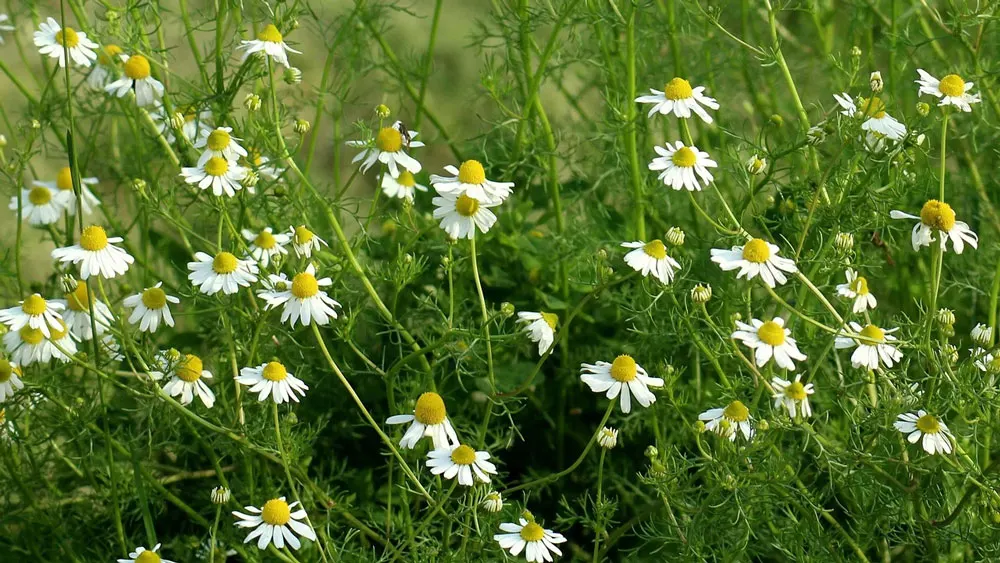
Chamomile
lat. Matricaria chamomilla
As we walk along sunlit paths through meadows and overgrown fields, we often come across chamomile. Delicate white flowers with yellow centres grow on a slender stem with feathery leaves. There are several flowers in nature that look similar, but true chamomile can be recognised by its domed, hollow centre and distinctive tea-like aroma. Chamomile is almost synonymous with tea, offering refreshment, warmth, and comfort for centuries.
Chamomile flowers can be gathered late April through September. When foraging, only the flower heads are picked, leaving the stems behind. The flowers are rich in essential oils which have a gentle calming effect. Chamomile tea is one of the best-known folk remedies for colds, coughs, digestive complaints and easing tension. Thanks to its anti-inflammatory properties, it is commonly used in traditional medicine as a compress for the skin and eyes.
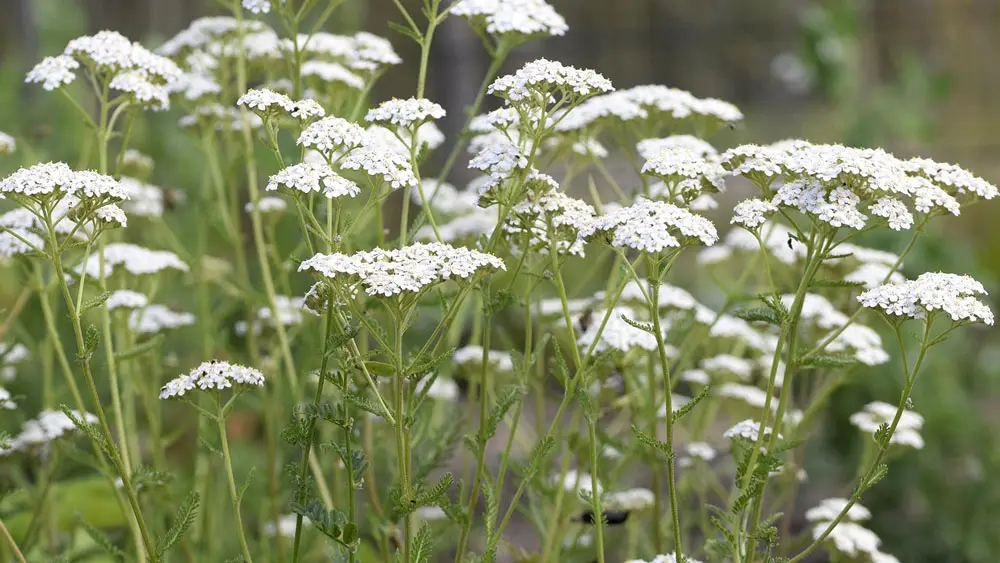
Yarrow
lat. Achillea millefolium
Among the many plants in sunlit meadows, yarrow particularly stands out. It is characterised by an upright stem covered with soft woolly hairs and finely divided, feather-like leaves. The name Achillea comes from Achilles, the mythical hero who is believed to have used yarrow to heal the wounds of warriors. According to folk tradition, it was also used by outlaws, which is why it is often called “outlaw’s herb”.
The young spring leaves are picked from late February to June, and in summer both leaves and flowers are collected for tea. The young leaves have a mildly bitter taste and can be mixed into soups, stews, and salads. The flowers are particularly rich in essential oils, adding a characteristic aroma to any dish or drink. Aromatic yarrow tea is traditionally used to relieve digestive issues, colds and fever, and is especially considered beneficial for easing menstrual discomfort.
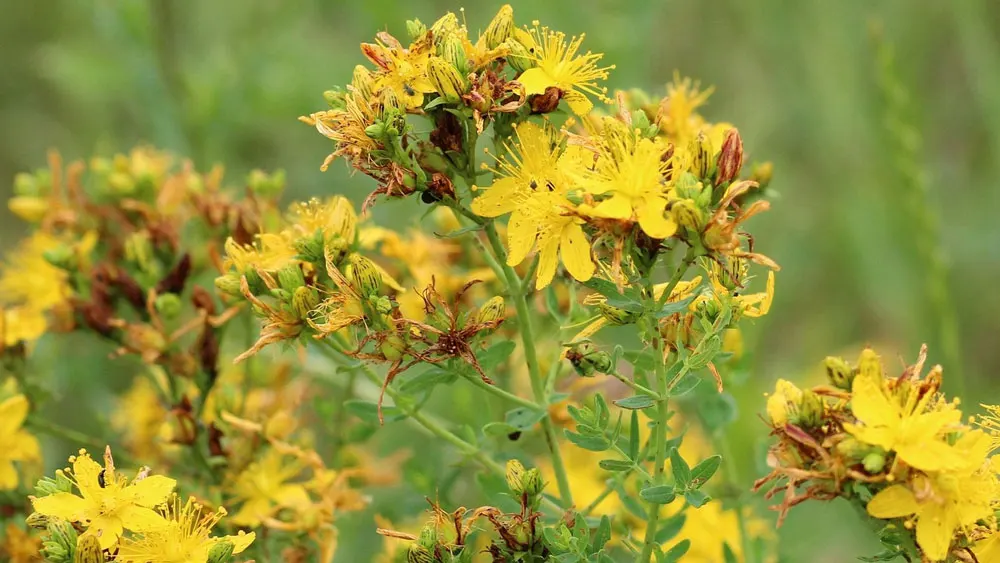
St John's wort
lat. Hypericum perforatum
If we linger in dry meadows, we might come across St John’s wort. It is easily recognised by its bright yellow flowers with five petals, often marked with small black dots along the edges. If we crush a flower or bud between our fingers, a reddish, blood-like stain appears on the skin. An even more important identifying feature is its leaves, which, when held up to the light, reveal tiny translucent dots. If a plant shows these characteristics, it is almost certainly St John’s wort, best known as a natural antidepressant.
St John’s Wort can increase skin sensitivity to sunlight and may interact with certain medications, so it should be used with caution.
St John’s wort is primarily used as a medicinal herb rather than in cooking. The flowers are gathered from June to August and are used to prepare teas, tinctures, and oils. Teas and tinctures are particularly well known for their effects on mild depression, anxiety, and nervousness, which is why the plant is often considered a natural antidepressant. St John’s wort oil, more commonly known as kantarion oil, is highly valued in skin care and wound healing, and may also help relieve muscle and nerve pain.
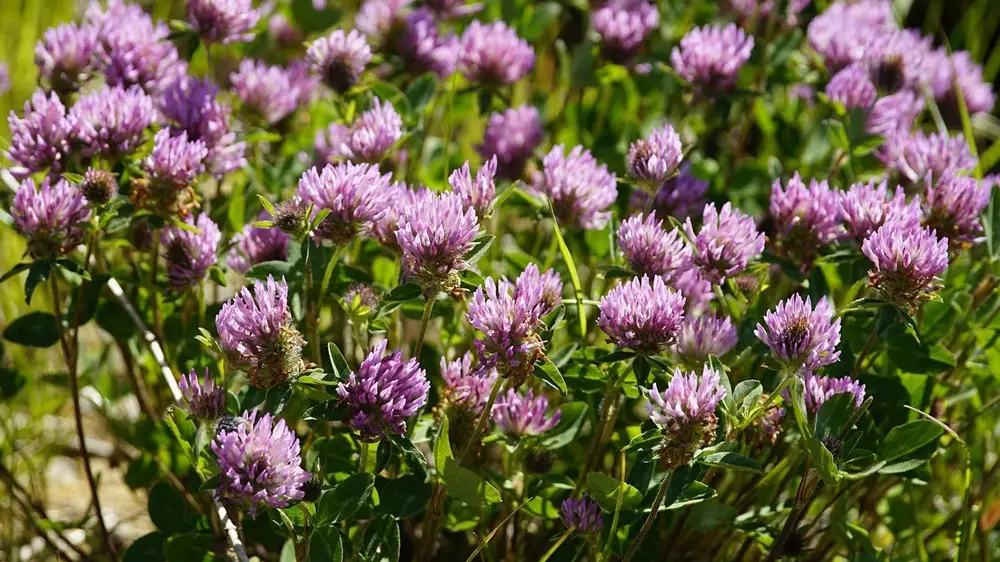
Red clover
lat. Trifolium pratense
Red clover can be found in many meadows and should not be overlooked. Beneath its crimson, round flower heads grow the trifoliate leaves typical of clover, often marked with pale whitish spots. While red clover has the classic three-part leaves, the four-leaved clover that symbolises luck is in fact a rare mutation. Nevertheless, the true “luck” of red clover lies in its high nutritional value and medicinal properties.
Young leaves can be gathered from spring through early summer, while the flowers are picked at full bloom from May to September. The young leaves are especially rich in vitamin C, carotene, and even protein. They are best lightly cooked before use and can then be added to soups or prepared like spinach. Unlike the leaves, the flower heads can be eaten raw, either added to salads or chopped into sandwiches. The flowers are most commonly dried for use as a herbal tea. The plant contains phytoestrogens that help maintain hormonal balance, making red clover tea especially beneficial for menopausal symptoms.
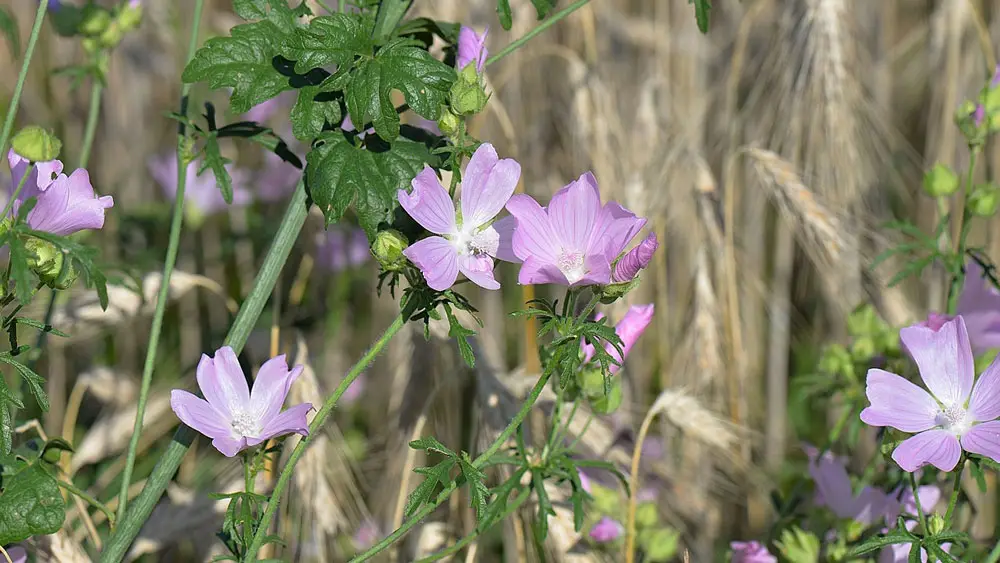
Common mallow
lat. Malva Sylvestris
As we pass through fields, clearings and neglected places, we cannot miss common mallow. It has tall stems with dark green, rounded leaves on long stalks, and pale lilac flowers with darker veins. Common mallow has been used as a medicinal and edible plant since ancient times. In folk medicine, it is often referred to as “the miraculous herb for the throat and digestion”.
Young leaves can be gathered from April right through to mid-summer. They are particularly rich in vitamin C, carotene, iron and calcium, placing them among the healthiest leafy vegetables. Thanks to their high mucilage content, they are ideal for thick soups and stews, and can also be cooked like spinach. Later, from May to September, the flowers can be added to salads or used as a delicate garnish for sweet and savoury dishes. Young leaves and flowers in full bloom are both gathered for medicinal tea. Mallow tea helps soothe coughs and irritated respiratory tracts and has a beneficial effect on the digestive system.
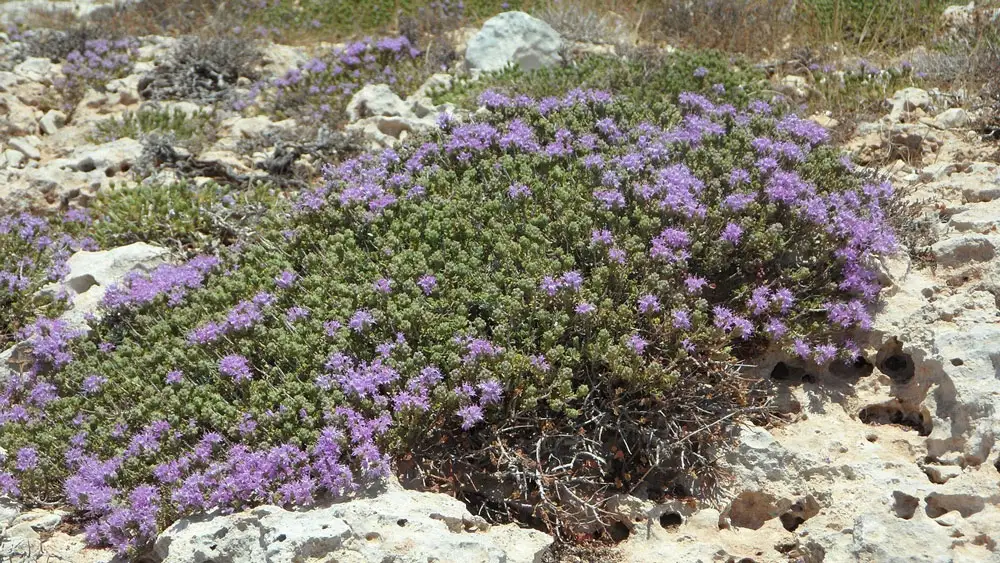
Wild thyme
lat. Thymus serpyllum
If we step onto sandy meadows, pastures and rocky ground, we may catch the scent of wild thyme. Low, creeping plant with small, oval leaves densely cover the ground, while in summer tiny light pink flower clusters appear. A closely related plant is commonly grown in gardens, most often as the species Thymus vulgaris. Thanks to its hardiness, thyme was a symbol of courage and strength in the Middle Ages.
Wild thyme has the most intense aroma when in full bloom, from June to July. The best time to gather the leaves is just before or at the beginning of flowering, when they are richest in essential oils. Fresh leaves can be added to salads and cooked dishes, while drying preserves them for later use. The leaves are most commonly used for seasoning, and the flowering tips are gathered for tea. Wild thyme tea helps relieve coughs, colds and digestive complaints, and may also ease minor inflammations of the mouth and throat.
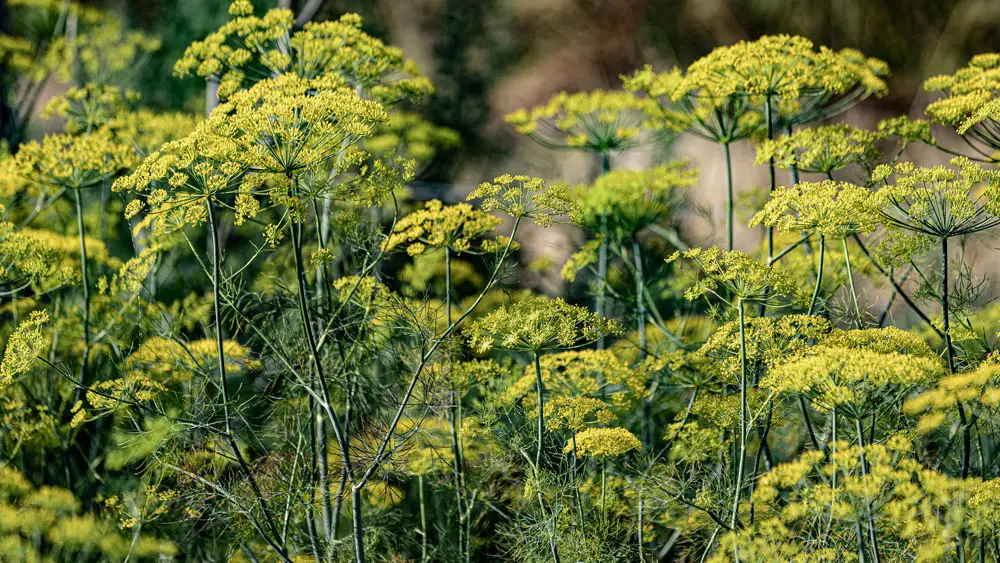
Fennel
lat. Foeniculum vulgare
On dry, stony pastures, fennel is particularly common. Although it’s a typical Mediterranean plant, it may also grow in some warmer inland areas. It is easily recognised by its branched stem with fine, feathery leaves and small yellow flowers gathered in umbrella-shaped clusters. Fennel was particularly valued among the ancient Romans as a valuable vegetable, spice and medicine.
Fennel can be confused with poisonous species such as hemlock, so it is important to remember that true fennel has a strong aniseed scent and yellow flowers.
The young, tender leaves can be gathered from spring to early summer. They are particularly rich in vitamin C and antioxidants. Since they don’t dry well, it’s best to use them fresh in salads, sauces and soups. Fennel flowers mainly during summer, from July to September. Unlike the leaves, the flowers are usually dried and used for tea or as a spice. However, the most valuable part of the plant is the fruit, commonly known as seeds, which ripens at the end of summer and beginning of autumn. The seeds are dried and used for herbal teas or as a spice in cakes, bread and stuffings. Fennel tea helps improve digestion, reduces bloating and cramps, and has a mild antibacterial effect.
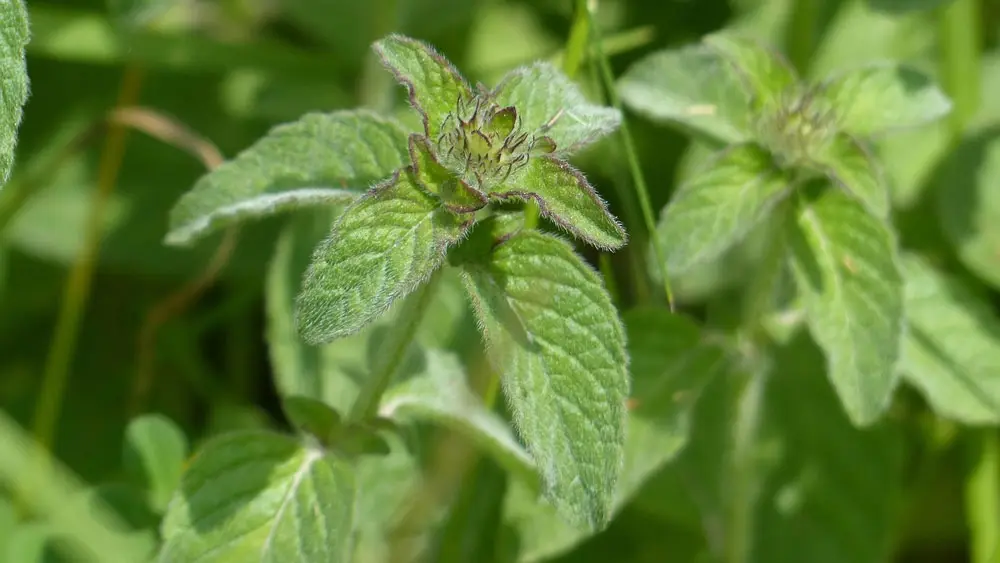
Wild mint
lat. Mentha spp.
If we turn towards the water, along springs, streams and canals, we're likely to find plenty of wild mint. There are many species, but in the wild we most commonly encounter corn mint (Mentha arvensis), long-leaved mint (Mentha longifolia) and water mint (Mentha aquatica). Although they differ in leaf shape, they all share certain properties and similar uses. They are characterised by serrated leaves that grow in opposite pairs, square stems and a distinct aroma. If we crush a leaf between our fingers, the strong menthol scent is the clearest sign that it is true mint.
Wild mint has its most intense aroma from late spring to mid summer, most commonly from May to August. The characteristic scent of the leaves comes from essential oil, whose main component is menthol, known for its refreshing aroma. Mint leaves can be added to sauces, salads, lemonades and fruit cocktails. The plant tops are picked for a refreshing tea and can be used fresh or dried. Mint tea is traditionally used to treat fevers, headaches and digestive complaints.
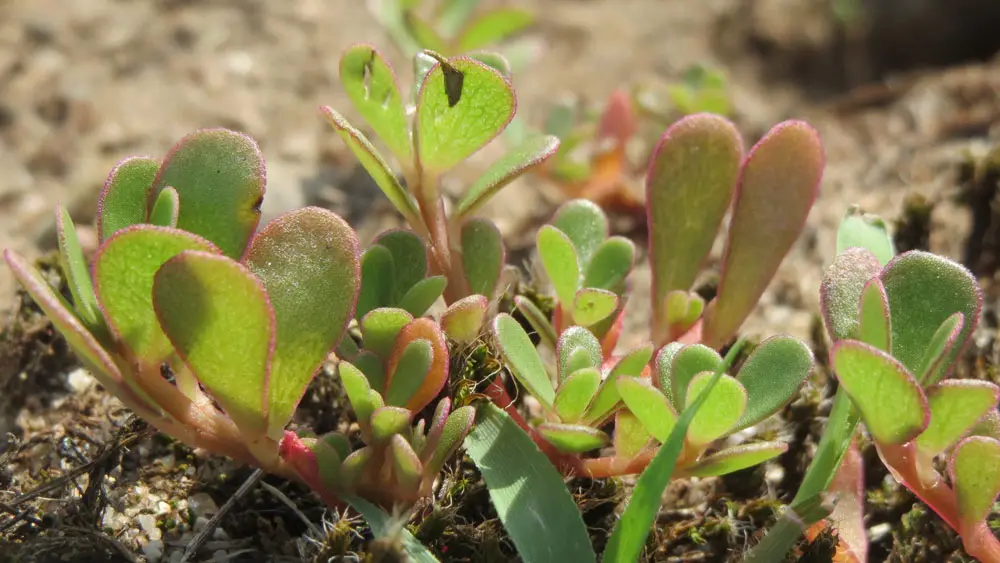
Purslane
lat. Portulaca oleracea
For some plants, such as purslane, we don’t have to go far. It is commonly found in gardens, yards, around houses, and along country paths, where it grows low to the ground. The plant has rounded, fleshy, reddish stems with thick, succulent, oval-shaped leaves. The leaves are green, but in strong sunlight they can develop reddish edges. During the flowering season, small yellow, star-shaped flowers appear, but only on sunny mornings. This easily accessible plant is very versatile and was once a highly valued food source.
Purslane contains oxalic acid, which can put a strain on the kidneys, so moderate consumption is recommended. The oxalic acid content can be reduced by blanching.
Purslane leaves can be gathered throughout the summer. They are rich in vitamins and minerals, especially iron, calcium and phosphorus. What makes purslane especially valuable is its high content of omega-3 fatty acids. Young leaves are excellent for salads, juices, and even preserves such as pickled purslane. Slightly older leaves are also edible, but they are better cooked in soups and stews, where their natural mucilage nicely thickens the dish. Like many wild plants, the leaves can be dried for medicinal tea. Purslane tea is traditionally used to relieve coughs, digestive issues, and headaches.
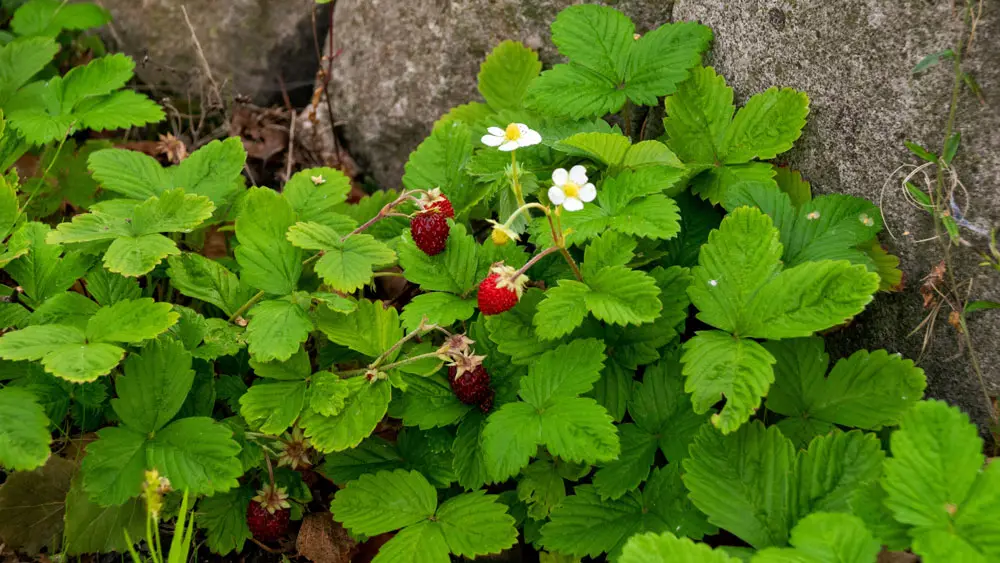
Wild strawberry
lat. Fragaria vesca
If we head into the woods, among bushes and thickets, we may discover wild strawberries. They are easy to recognize by their distinctive leaves, which consist of three serrated leaflets on long, hairy stalks. In late spring, the plant produces delicate white flowers with five petals, followed in summer by small, fragrant, bright red fruits. Wild strawberries do not produce much fruit, but they are often tastier and more nutritious than cultivated varieties.
The young leaves can be gathered in spring and early summer, while the fruits ripen from May through August. Both the leaves and the fruits are rich in vitamins and minerals, especially vitamin C and manganese. Fresh young leaves make a wonderful addition to salads, while the dried leaves produce a pleasant herbal tea that aids digestion and supports overall health. The fruits are best eaten fresh, but they are also excellent for making jams, syrups, compotes, and cakes.
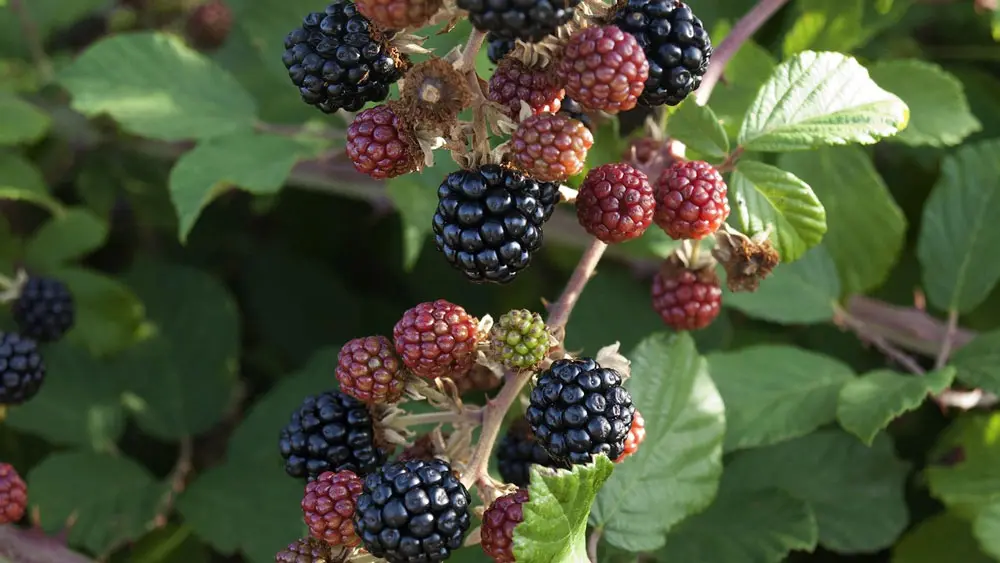
Blackberry
lat. Rubus fruticosus
When foraging for wild forest fruits, blackberries are one of the easiest to find. Their branched bushes spread along sunny forest edges, country paths, and neglected areas. On thorny branches grow leaves made up of three to five serrated leaflets. In early summer, delicate five-petaled flowers, white or pale pink, begin to bloom. Later, the fruits develop, first light green, then red, and finally black and glossy when fully ripe. Although we often think of it as a single berry, the blackberry is actually made up of many tiny connected drupelets.
Before or at the beginning of flowering, from May to June, young blackberry leaves are gathered for tea. Fresh leaves contain more vitamin C than the fruit itself. Blackberry leaf tea is valued for its ability to soothe digestion and relieve sore throats. The juicy fruits ripen gradually from August to October. They can be eaten fresh or frozen for later use. Blackberries make delicious jams, pies, cakes, and even wine. Blackberry wine, consumed in moderation, is traditionally believed to improve circulation and strengthen immunity.
From flowers to fruits, summer offers an abundance of edible and medicinal wild plants. Foraging is not only for the experienced, especially when choosing easily recognisable species. For those seeking deeper knowledge, it is always best to check reliable local sources. Guided by curiosity, caution, and a love of nature, enjoy summer foraging!
Download the summer wild herb foraging calendar for free as a handy reminder of what to forage in summer.